
"The government is aware that China is developing infrastructure in border regions opposite India in Tibet and Xinjinag Autonomous Region. This includes the Qinghai-Tibet railway line with proposed extension upto Xigaze and Nyingchi and the development of road and airport facilities," Defence Minister A K Antony told the Rajya Sabha
India brought in more troops after the destruction of two of its bunkers and "aggressive tactics" adopted by the Chinese People's Liberation Army

'India's military posture has become significantly stronger than China's on the 3,500-kilometre Line of Actual Control.' 'This is enhancing confrontation between the two sides,' points out Ajai Shukla.

'Unlike the Chinese army that has been largely a peace time force, the Indian Army is a battle hardened force,' explains Colonel Anil A Athale (retd).

'The missile mounted near Kailash-Mansarovar is called DF-21. It is a medium-range, 2,200 kilometres ballistic missile. Its advantage is that it can cover all cities of north India, including New Delhi'
With China hardening its stance on the Kashmir issue, India now should be rethinking on appropriate policy options on Tibet, Taiwan or even on Xinjiang, says China expert Srikanth Kondapalli.
'India and China have to make concrete progress with regard to the border issue, addressing the trade deficit, and facilitating people-to-people interactions. This has to happen in the next two, three years.' China expert Tansen Sen tells Sheela Bhatt/Rediff.com how India and China can take their relations to the next level.

The Chinese media has accused India of using the Dalai Lama card to deal with China's growing economic and political influence in South Asia and warned New Delhi of "severe consequences" if it hosted the Tibetan spiritual leader in a "disputed" area in Arunachal Pradesh.

'One must remember that a dragon has a forked tongue,' warns Vivek Gumaste.

'If, as appears to be the case, India is on way to 'mending fences' with China, and China is equally desirous to 'reset' the relationship, this could be a self-reflexive moment in India's positioning vis-a-vis not just the Dalai Lama, but also the Tibetan issue and China as a whole,' points out China expert Alka Acharya.
Even senior Indian officials have openly stated that Chinese troops did not enter into the Indian territory, Wang said.
It is learnt that the India's top military brass is constantly monitoring the evolving situation even as the United States said the aggressive behaviour by Chinese troops was a reminder of the threat posed by China.
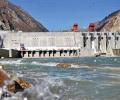
The proposed tunnel, which would drop down from the world's highest plateau in multiple sections connected by waterfalls, would provide water in China's largest administrative division, comprising vast swathes of deserts and dry grasslands.
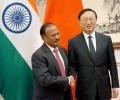
The decision was taken during the annual 19th round of boundary talks in Beijing between National Security Advisor Ajit Doval and his Chinese counterpart Yang Jiechi.
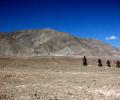
While the de-escalation process was underway, a violent face-off took place on Monday night between Indian and Chinese troops leading to the death of 20 Indian soldiers.

Sources said that even though India and China have been talking at the diplomatic and the military level for over six weeks now, there has been no thinning down in troop numbers or equipment by the Chinese side on this front.

'It will be a repeated folly to ever think that China will not attack us.'

'The Chinese are retaining geostrategic pressure on India by keeping troops there and building infrastructure continually.'
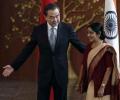
The entire gamut of bilateral ties including the contentious boundary issue was discussed during a "cordial and substantive" engagement between the foreign ministers of India and China in New Delhi who met within two weeks of installation of the Narendra Modi government.

'If you behave like a nail, the adversary will behave like a hammer.'
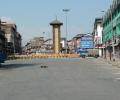
India has been maintaining that China has no locus standi in commenting on Jammu and Kashmir.
The government is aware that China is developing infrastructure in the border regions across India and a constant watch is kept on developments having a bearing on national security, the External Affairs Ministry told the Rajya Sabha on Thursday.

This is not for the first time that the Dalai Lama is visiting a border region as he had visited Ladakh as well Arunachal Pradesh several times in the past, the functionary said.
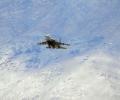
The Chinese fighter aircraft activities took place from its bases including the Hotan, Gar Gunsa and Kashgar airfields which have been upgraded recently to enable operations by all types of fighters along with concrete structures to hide away the presence of the number of fighters present at its different airbases, the sources said.
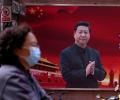
China has not limited the 'battle' to the diplomatic field alone; the People's Liberation Army has become aggressive on the ground too. The recent 'fights' in Northern Sikkim and Ladakh are part of the pattern, asserts Claude Arpi.
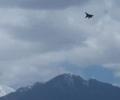
The air force has moved its critical frontline assets including the Sukhoi-30MKI, Mirage 2000 and Jaguar fighter aircraft fleet to advanced positions where they can fly in at a very short notice to carry out operations.

The chaos on its stock markets, a fierce battle between the old and new guard in the Communist Party and the restive border provinces of Tibet and Xinjiang forebode tough times ahead for China, says Claude Arpi.
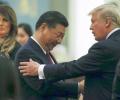
'While many Chinese policy makers dismiss the political, economic and technological component of US-India relations, they express caution on the defence-related ties which also happens to be a major driver in US-India relations,' explains China expert Srikanth Kondapalli.

'Vijay Gokhale's appointment as foreign secretary can be regarded as a certain 'adjustment' that could make a difference to the poor climate of India-China relations,' says Ambassdor M K Bhadrakumar.
However, Beijing expresses readiness for talks to reopen the Nathu La pass for the Kailash-Mansarovar Yatra.

In the fourth such incursion since March, two helicopters of the People's Liberation Army of China hovered for about five minutes in Uttarakhand's Chamoli district and "could have carried out aerial photography of Indian ground troops," according to official sources in the government.

As of now, in the case of China's border dispute with India, China is not likely to lose much if it does not resolve the dispute. In fact, the unresolved border dispute has much to offer to China, says Sana Hashmi.

'China any day would prefer to team up with India and dump Pakistan once the resolution of the border dispute becomes an accomplished fact.'

Though the Chinese find it necessary to oppose the visits of Indian leaders to Arunachal Pradesh, they want to keep the objections at a moderate level lest it cast a shadow on Narendra Modi's visit to China in May, says D S Rajan.

Dominic Xavier wonders if the Pentagon's claim that China has built a village in Arunachal Pradesh is true, was the government caught napping?
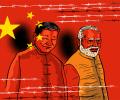
The reasons for China's negative response are located in its territorial dispute with India but also to its grand designs of dominating the region from its previous position of being merely a "balancer" between India and Pakistan, points out Srikanth Kondapalli, Professor in Chinese Studies at JNU.

Important for India was Xi's meeting with representatives of PLA officers and soldiers stationed in Tibet. The video of the encounter was interesting to watch, especially the large number of lieutenant generals and major generals, observes Claude Arpi.

Admitting that it was aware of China developing rail links in its border areas, including Tibet and Xinjiang Autonomous Regions, India said on Wednesday it keeps a 'constant watch' on all developments having a bearing on its security.
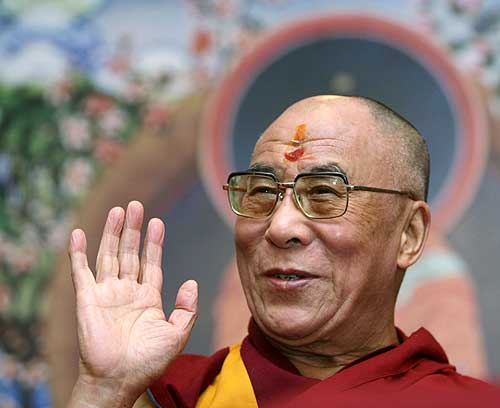
'The first time that China alleged the Dalai Lama was 'anti-national' and 'unpatriotic' was after he affirmed that Arunachal Pradesh and Tawang are part of India,' points out former RA&W official Jayadeva Ranade.
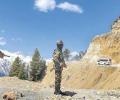
This is the third round of Corps Commander-level talks being held. The first two rounds had taken place in Moldo on the Chinese side of the LAC.
